You must be signed in to read the rest of this article.
Registration on CDEWorld is free. You may also login to CDEWorld with your DentalAegis.com account.
For many years, dental practices have had the luxury of operating without paying careful attention to their business performance numbers. The economics of supply and demand, which typically resulted in a surplus of patients, allowed practices to perform well without closely monitoring their performance. Today, dentistry is changing and like many industries it is more competitive than in the past. Factors impacting contemporary dental practice include competition from other practices, the emergence of dental support organizations (DSOs), lower reimbursements from insurance companies, and the increasing cost of and competition for competent staff.1
As dentistry changes, the first step in achieving and maintaining a flourishing, prosperous practice is understanding the business performance metrics. Only when the management of a dental practice comprehends its key performance indicators (KPIs) can the practice continually improve and thrive.
Key Performance Indicators and Why They Matter
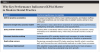
Before a dental practice can begin to consider which specific goals or targets to measure, it needs to understand the concept of KPIs. A KPI is a measurement that is critical or essential to a business. In the case of dentistry, practitioners must identify which KPIs are important and should be understood and tracked on a consistent basis. KPIs tell a story and can quickly indicate the general health of a practice along with its weaknesses and opportunities. By establishing a set of KPIs, a practice can then carefully track its performance for each KPI against the target or goal (Table 1).
Another reason to track KPIs is that when a KPI is identified as underperforming, it allows the practice to address and correct the challenge faster and easier. The longer it takes to identify a potential problem, the more time-consuming and expensive the solution usually is. By tracking KPIs consistently, the practice can know where it is underperforming and take action to rectify the situation.
Yet another reason to track KPIs is to identify when the practice is exceeding a goal or target for a specific metric. It is just as important to understand why a practice is successful in any given area as it is to know why it is unsuccessful. When the practice comes to a realization that a KPI is overperforming, it can seek additional opportunities to maintain that level of excellence or even push the overperforming metric further by understanding what is causing the success in the first place.
KPIs in Dental Practice
The most important KPI or metric in any dental practice is production. Production is an indication of overall practice performance and usually indicates the success level of a practice. When production is good, this is an indication that the practice is healthy. While there is an exception to this general principle (to be discussed later in this article), in most cases a strong level of production signifies that the practice is performing well.
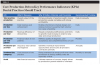
The following seven KPIs are all relative to practice production (Table 2). They can be easily tracked and quickly assessed to be underperforming, on target, or overperforming.
There are two major components to understanding KPIs. The first is to set a goal or target for each KPI. By definition, KPIs are quantitative, and it is imperative to first set a quantitative goal that can be measured. The second component is to measure the KPI on a consistent and regular basis against the goal. For example, a practice that targets increasing production by 10% over the next 12 months can track this carefully along the way to determine if the practice is likely to reach that goal. All KPIs need to be measured against the goal or target that has been set.
KPI #1: Total Practice Production
As referenced above, production is the critical overriding KPI for a dental practice. Practices need to focus on maintaining and/or increasing production depending on goals. Production indicates the overall health of a practice. As practices track their production, they can then identify opportunities to increase it and move the practice forward.
Recommendation: Target to increase practice production by 15% to 18% each year for the next 3 years.
Tracking interval: Daily, weekly, monthly, quarterly, and annually.
KPI #2: Production Per Day
Many dentists are familiar with the concept of having a daily production goal. However, most practices that have sought business guidance from the author’s consulting firm do not have or actually track a daily production goal, even though they have been exposed to the concept. Establishing the daily production goal is easy. The practice simply identifies the annual production goal described above and then breaks it down based on the number of days the practice will be operational. This is the daily production goal for the entire practice regardless of the number of providers.
The benefit of having a daily production goal is that it allows the front desk team to create and design a schedule to achieve the production per day goal. Although many practices have a high volume of patients, there may be relatively low production per patient, high levels of fatigue, and an extremely busy schedule. When a production per day goal is established and tracked, the practice can then take the next action of designing the proper schedule.
Recommendation: Establish the production per day goal and design a schedule that allows the practice to achieve or exceed the goal over 90% of the time.
Tracking interval: Daily.
KPI #3: Production Per Hour
At this point, it may seem like overkill to also consider production per hour; however, this metric is critically important. A practice can derive different information by examining overall production, production per day, and production per hour. The production per hour statistic helps the practice understand how to mathematically improve its schedule. For example, a practice that has a high volume of preferred provider organization (PPO) patients will have a lower production per hour, even though it might have a higher volume of patients than a fee-for-service practice. Also, putting new patients off for several months will result in a lower production per hour than blocking sufficient time in the schedule to allow new patients to be seen quickly each month. New patients, when comprehensively examined for the first time, typically represent a higher financial value in their initial 12 months versus current active patients whose treatment needs have already been identified and mostly completed. This allows practices to redesign schedules to reach true practice potential, which many practices often miss.
Practices should track production per hour each day and evaluate whether or not it is increasing. The simple formula is that if production per hour is not increasing, the practice will not be able to increase its daily goal, and total production will not rise. Assuming practice overhead increases each year—which is to be expected—if production remains flat, practice profit will decline, and that’s a problem.
Recommendation: Track each provider’s production per hour.
Tracking interval: Daily.
KPI #4: Production Per New Patient
New patients are the lifeblood of a dental practice. For reasons mentioned above, during their first 12 months in the practice, new patients typically generate more production than existing patients. If the practice does not have a sufficient number of new patients, production will invariably flatten and eventually decline. If the production per new patient is no greater, or even lower, than production per existing patient, it could be that new patients are not receiving comprehensive diagnoses. A practice should provide complete evaluations for every patient and be prepared to offer all possible dentistry, including elective services. The practice should adopt a protocol of evaluating all areas of potential dental treatment for a patient, including periodontal, restorative, esthetic, implants, and sleep services. Offering a wide range of services, or adding new ones, allows more opportunity to provide treatment in the practice, often resulting in higher production.
Another possibility for low production per new patient is that the patients are not sufficiently accepting recommendations for treatment. Case acceptance can be improved through such strategies as building trust through transparent communication, incorporating the use of visual aids such as intraoral cameras to show patients their condition, and offering amenable financial options.
Any or all of these strategies can be derived by reviewing the production per new patient and evaluating whether it is increasing, flat, or decreasing.
Recommendation: Identify the average production per new patient and build sufficient blocks into the schedule to ensure an adequate number of new patients are seen monthly to help achieve the annual production goal.
Tracking interval: Monthly.
KPI #5: Production Per Provider
The practice should know the total level of production of each provider whether it is an owner, partner, associate, or hygienist. These are the individuals that drive practice production, and many practices only look at their collective totals. An analysis of the production per partner allows the practice to identify opportunities for improvement. For example, the author has observed many dental hygienists increase their production by upwards of an estimated 20% by diagnosing and recommending gingival or periodontal treatment, catching the patient up on ancillary hygiene services such as x-rays and fluoride, calling overdue hygiene patients to schedule during downtime, discussing elective services with patients, and being trained to identify potential treatment to refer back to the doctor.
Recommendation: Analyze the annual production of each provider to better understand if and how they can increase their production.
Tracking interval: Annual.
KPI #6: Overhead
Although many dentists may know the overall overhead percentage of the practice, they may not know it in categories. For example, staffing is the single largest expense in a dental practice,2 and it has increased significantly since COVID mostly because of a shortage of available dental staff, particularly hygienists.3 As staff compensation has increased, it has impacted practice overhead greater than ever before. Practices need to be analytical regarding overhead. While lowering overhead can be challenging, every 1% decrease in overhead means $1,000 of income for every $100,000 of revenue. This means that an $800,000 per year revenue-based practice that reduces overhead by 4% will increase doctor income by $32,000.
Overhead is a critical KPI for dental practices and must be monitored, as it tends to increase without being recognized. Some individual or group of individuals on the team should be assigned to monitor overhead with the goal of minimizing expenses where possible.
Recommendation: Review the practice expenses by line item every 90 days.
Tracking interval: Monthly, quarterly, and annually.
KPI #7: Profit
While profit is obviously a critical KPI that should be constantly monitored, it must be measured at the end of the year for growth comparison. Year-end is also when owner-dentists typically make decisions about how to spend the profit (eg, take it as income, reinvest it in the practice, etc). A practice’s main focus should be on production, as it can be measured daily, weekly, monthly, and annually. Typically, if production increases, profit will increase as well. The exception is if overhead increases faster than production, which was prevalent in 2022 coming out of COVID when practice production often was lower than overhead increases due to rises in staffing compensation in many practices. In most years, however, unless there is a significant increase in overhead for a specific reason, increased practice production will indicate increased profitability.
Because overhead is a necessity, a practice can only reduce it by a finite amount; in the author’s experience this is usually somewhere between 4% and 6%. Conversely, production can be increased infinitely, meaning that it could grow by anywhere from 2% to 20% or more depending on the actions taken by the practice. Therefore, although it is always beneficial to concentrate on reducing overhead, a practice’s primary focus should be on increasing production, which will have a greater impact on profit.
Summary
The KPIs listed above are the basics. There are others beyond this article that should also be tracked, including staff compensation, no-shows, last-minute cancellations, insurance participation, and reimbursement status. Starting with the list provided above will create opportunities for any practice that is interested in increasing production, controlling overhead, and, ultimately, increasing profitability.
ABOUT THE AUTHOR
Roger P. Levin, DDS
Chief Executive Officer and Founder, Levin Group, Inc., a dental management consulting firm that has worked with more than 30,000 dental practices
Queries to the author regarding this course may be submitted to authorqueries@conexiant.com.
REFERENCES
1. Health Policy Institute, American Dental Association. Economic outlook and emerging issues in dentistry. 4th quarter, 2025. www.ada.org/-/media/project/ada-organization/ada/ada-org/files/resources/research/hpi/q42025_economic_outlook_dentistry_main.pdf. Accessed January 22, 2026.
2. Watrous TD. Dentists: is your practice’s overhead too high? Aprio website. February 15, 2022. https://www.aprio.com/insights-events/dentists-is-your-practices-overhead-too-high/. Accessed January 22, 2026.
3. Cortigiano C. How dental staffing has changed since COVID. Becker’s Dental & DSO Review website. January 21, 2025. https://www.beckersdental.com/featured-perspectives/how-dental-staffing-has-changed-since-covid/. Accessed January 22, 2026.